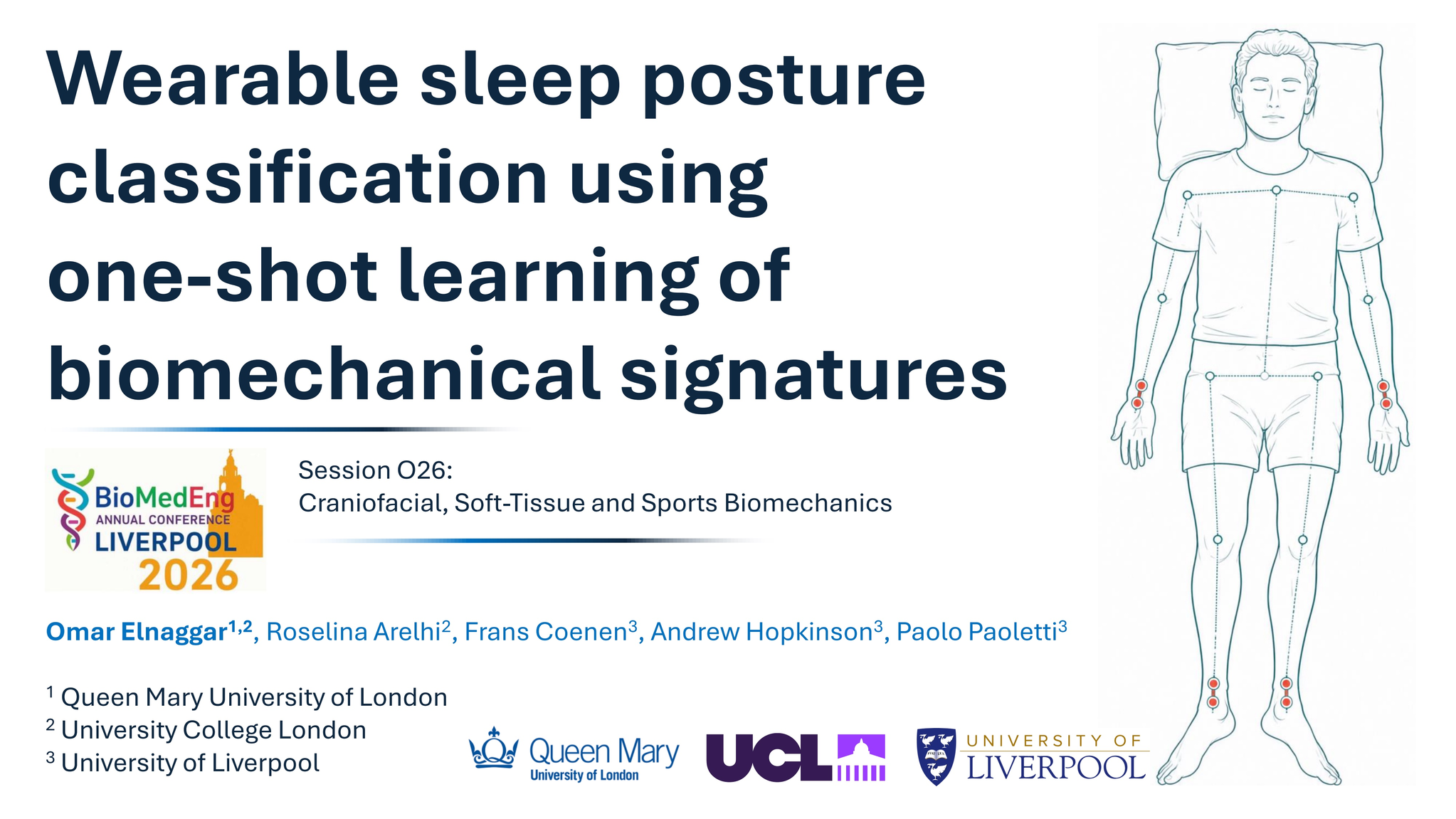
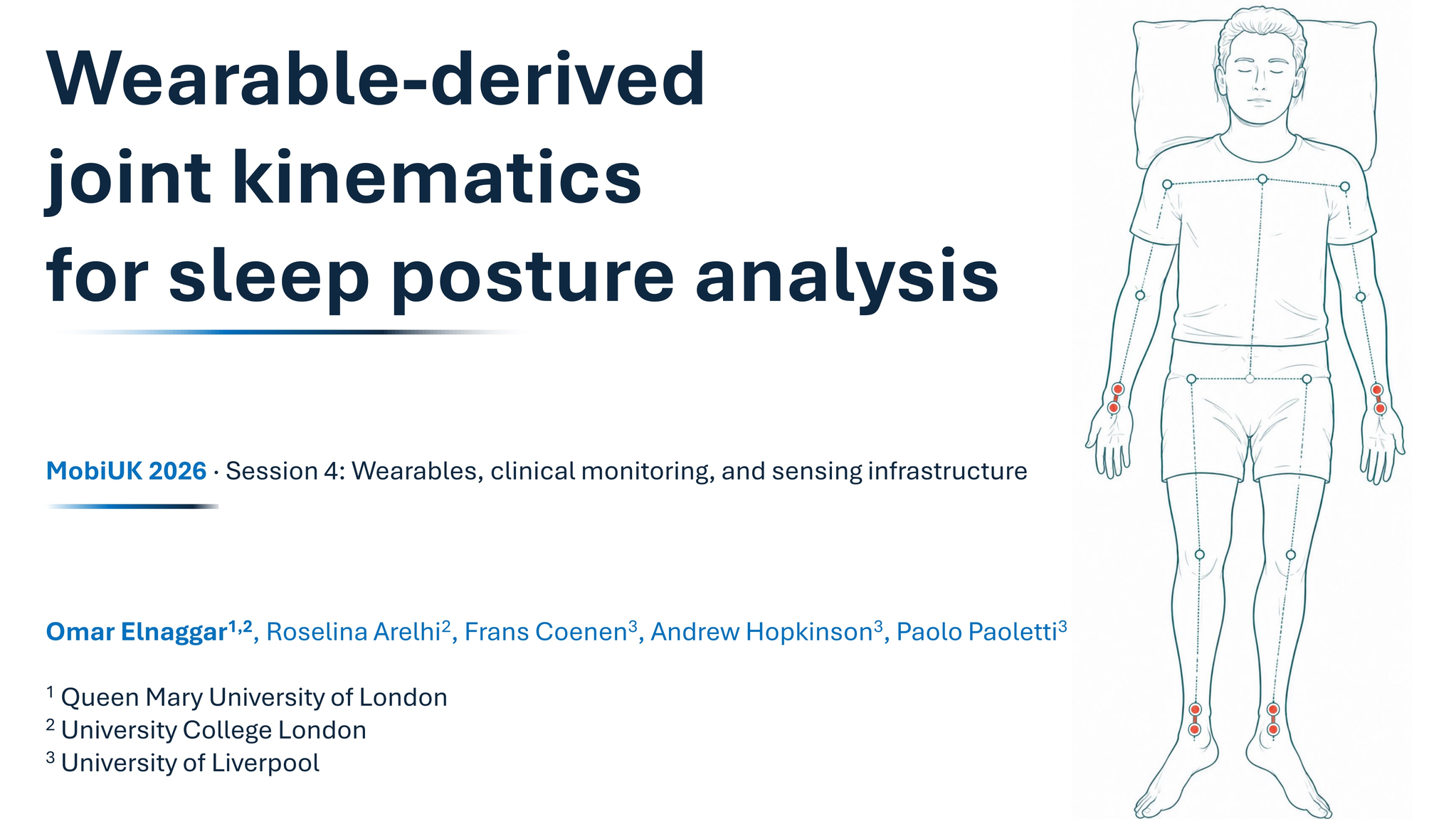
Recognising complex sleep postures from wearable joint measurements, with one-shot learning and an examination of the challenges beyond controlled experiments.
Using wearable-derived wrist and ankle orientations to investigate sleep posture recognition when labelled examples are scarce.
A clear, lay-friendly pipeline for creating interactive learning materials with generative AI, demonstrated through examples from my engineering teaching practice.
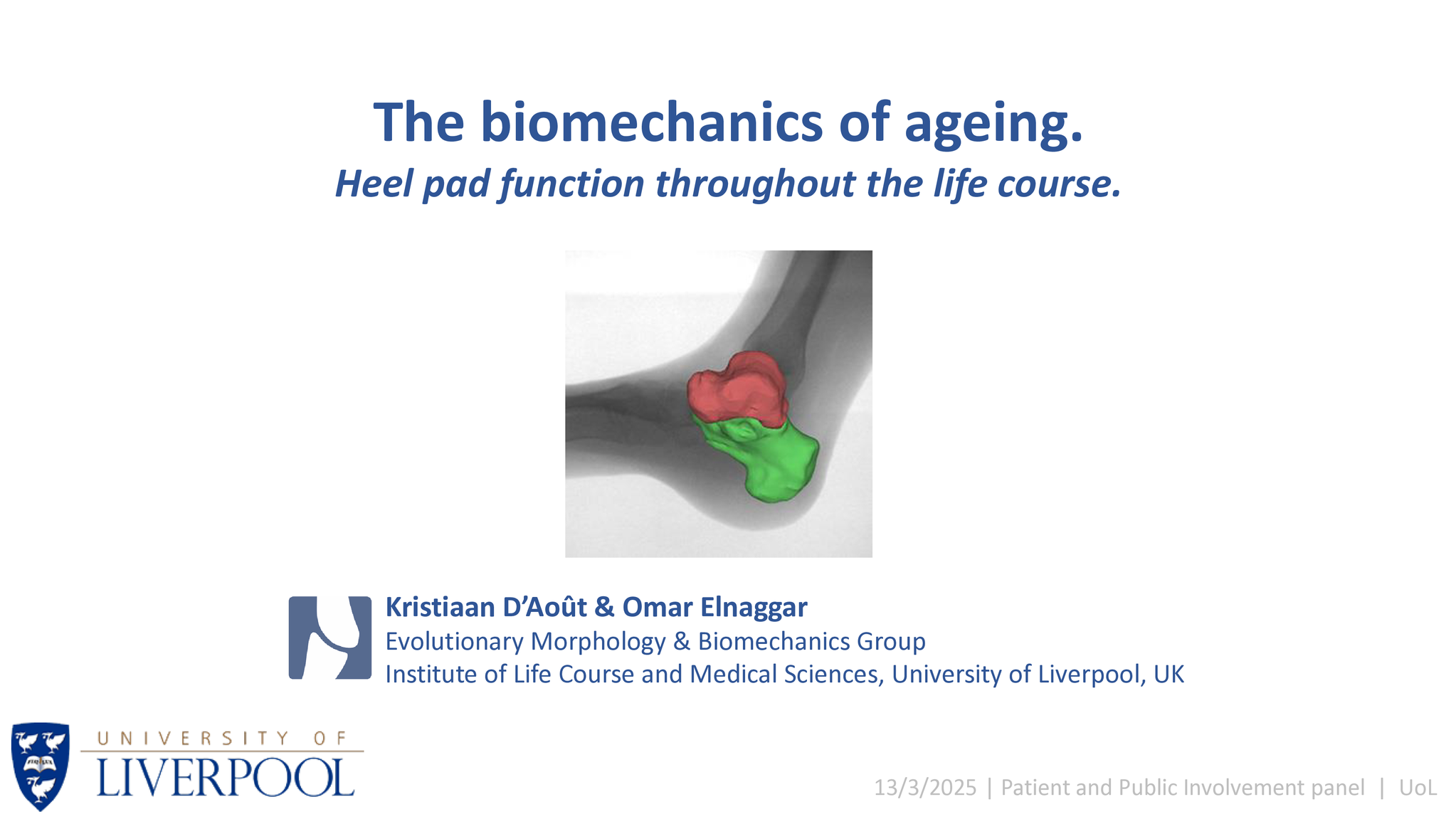
Sharing findings on heel-pad biomechanics and ageing with a patient and public involvement panel, whose perspectives helped shape future research directions.
Findings from a large UK–India dataset exploring heel-pad structure, tissue mechanics and gait in relation to ageing and footwear.
A guest lecture on robotic sensors, actuators, measurement uncertainty and the foundations of sensor fusion and perception.
An introduction to how robots sense and act, from sensor and actuator choices to reasoning with uncertain measurements.
Exploring a three-dimensional view of wrist orientation through synthetic motion data, wearable sensors and nonlinear dimensionality reduction.
Two engineering laboratory case studies exploring how game-based design can serve subject understanding and learning outcomes.
Investigating extremity-limb orientation as a wearable sensing approach to distinguishing sleeping poses.
Making peer learning visible through an engineering coursework handover, student surveys and AI-based visualisation.
A simulation-based study of twelve sleeping poses, using synthetic inertial data and machine learning to address scarce labelled examples.
Introducing the motivation and computational foundations for wearable recognition of human posture during sleep.