
1 What draws me to this area
I am interested in how students develop an understanding of engineering: how they connect theory with the behaviour of real systems, learn through experimentation, and develop confidence in their own judgement. My work explores the design of assessments and digital resources to support that process.
My experience teaching robotics, mechatronics, control and engineering computing has made these connections especially important to me. An equation becomes more meaningful when students can change a parameter, observe what happens and explain why. Equally, building a working system creates opportunities to question assumptions, interpret imperfect measurements and learn from unexpected behaviour.
I want to create learning experiences that give students room to investigate, discuss and make decisions, while helping educators quantify, understand and support that learning.
2 Questions that interest me
Some questions that motivate my work include:
- How can interactive activities help students ground engineering theory in practice?
- How can virtual and physical laboratories complement one another?
- How can we quantify and interpret within-class knowledge exchange in collaborative activities?
- How can educators create useful, accessible interactive teaching materials?
These are starting points for exploration. Different engineering subjects, student backgrounds and teaching contexts bring further questions of their own.
3 Learning through experimentation
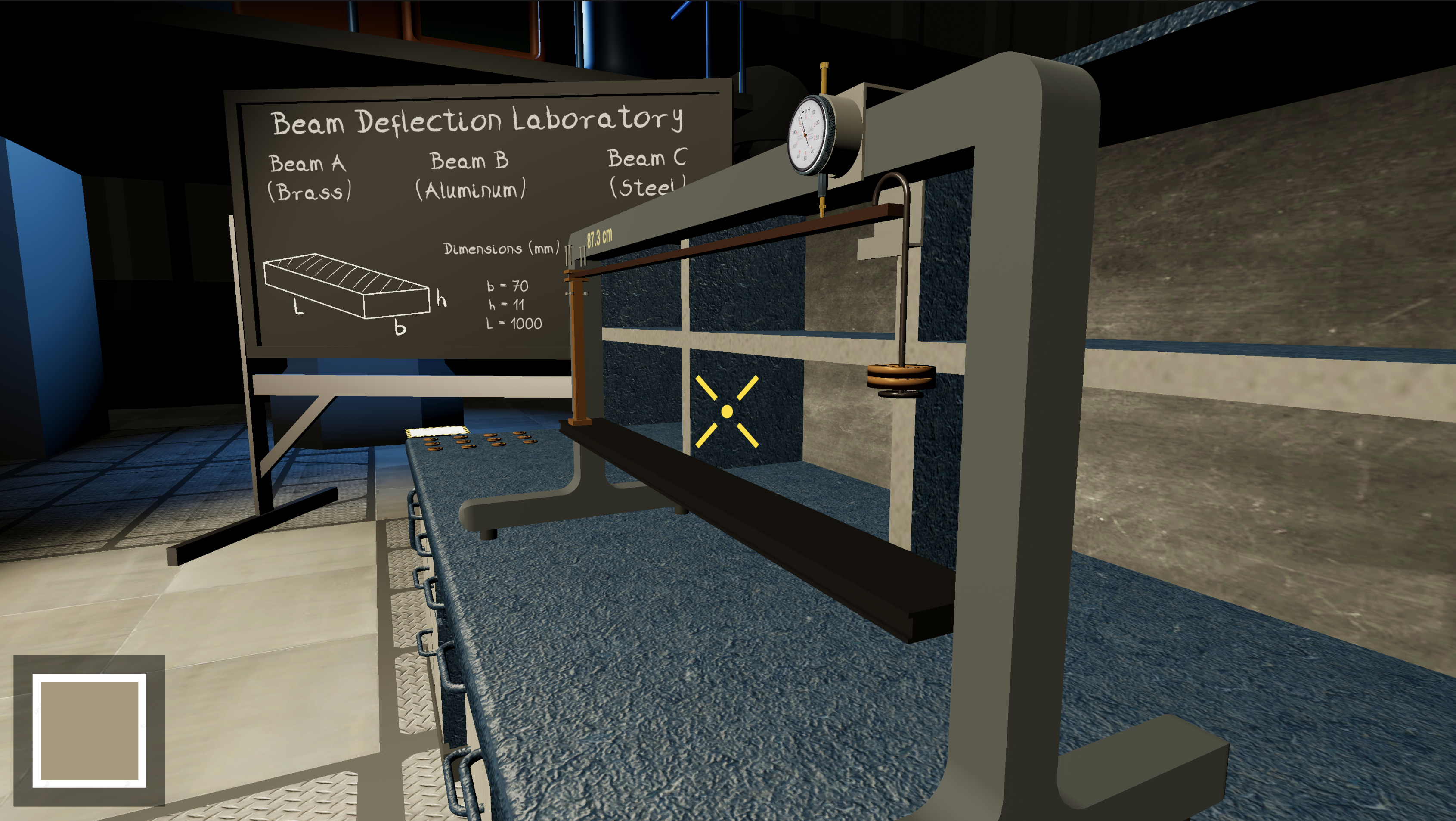
I am interested in practical learning that gives students meaningful choices: forming a prediction, testing an idea, comparing observations and revising an explanation. Physical laboratories, design-build activities and virtual experiments offer different opportunities for this kind of exploration.
Working with collaborators, I have developed game-based virtual engineering laboratories, including work presented through mechanical and computer engineering case studies at the Advance HE Teaching and Learning Conference in 2022. I also served as technology lead and co-investigator on the Studentainment virtual-laboratory project.
For me, the interesting challenge is connecting the activity with what students need to understand. I would like to explore how virtual environments can support preparation, repeated experimentation and reflection alongside the practical experience of working with physical equipment.
4 Making engineering concepts interactive
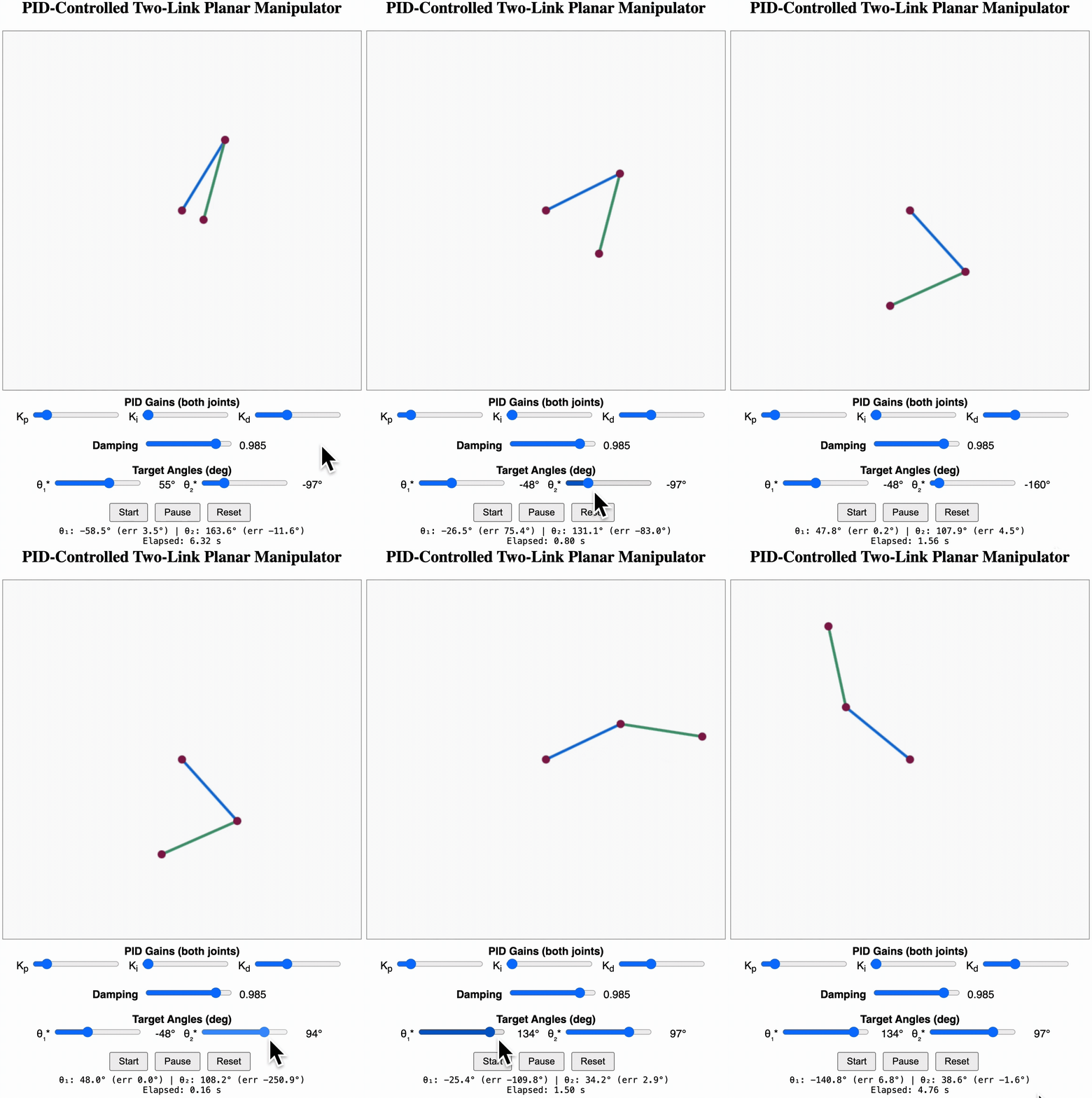
Interactive resources can let students explore relationships that are difficult to communicate through a static diagram alone. In my teaching materials, I use controls and visual feedback to invite students to change a system’s parameters and examine its response. Robot control provides one example of this approach.
With Roselina Arelhi, I presented a framework for creating interactive learning materials with generative AI at Advance HE in 2025. This work explores how educators can develop and customise resources without extensive technical expertise.
I am interested in making this process more approachable while keeping educators’ judgement central: checking technical accuracy, choosing useful interactions and considering how different students will access and use the material.
Watch an example: exploring robot control
5 Understanding learning and collaboration
Engineering work depends on explaining ideas, interpreting someone else’s work and contributing to shared decisions. I am interested in learning activities that make those processes visible, and in evidence that helps educators understand students’ developing knowledge.
In our 2021 classroom knowledge-exchange study, Roselina Arelhi and I explored a group-coursework framework involving a handover between teams. We combined survey information with AI-based visualisation to investigate students’ knowledge alongside conventional assessment measures.
This experience informs my interest in authentic assessment, constructive feedback and collaborative learning. More recently, I have contributed to a departmental, evidence-led demonstrator-training development at Queen Mary’s School of Engineering and Materials Science. Across these activities, I want to understand both the learning experience and the support students need to participate effectively.
6 Possibilities and connections
I would like to explore further connections between practical engineering education, interactive resources and the evaluation of learning. Possible directions include linking virtual and physical experiments, developing resources with students and educators, and examining how different learners engage with collaborative activities.
I welcome conversations with engineering educators, education researchers, developers and prospective research students. If you are interested in laboratory learning, interactive engineering concepts, knowledge exchange or thoughtful uses of AI in education, I would be pleased to hear from you.
.
7 Selected work
- Virtual engineering laboratories: Design and development of game-based learning for virtual engineering laboratories: Two case studies, Advance HE conference presentation and abstract, 2022.
- Creating interactive resources: A generative AI-empowered framework for creating interactive learning materials without prior technical expertise, Advance HE conference presentation and abstract, 2025.
- Learning through knowledge exchange: Quantification of Knowledge Exchange within Classrooms: An AI-based Approach, The European Conference on Education: Official Conference Proceedings, 2021.