
I went to India to study feet, footwear and ageing gait. What I keep coming back to is the way people welcomed us.
In January 2025, our biomechanics research took us to Bangalore and rural communities in Karnataka. We brought a portable experimental setup distributed across several bags and suitcases, found places to work, and collected unique and valuable field measurements from volunteers. That is the straightforward version of the trip. It leaves out almost everything that made it special.
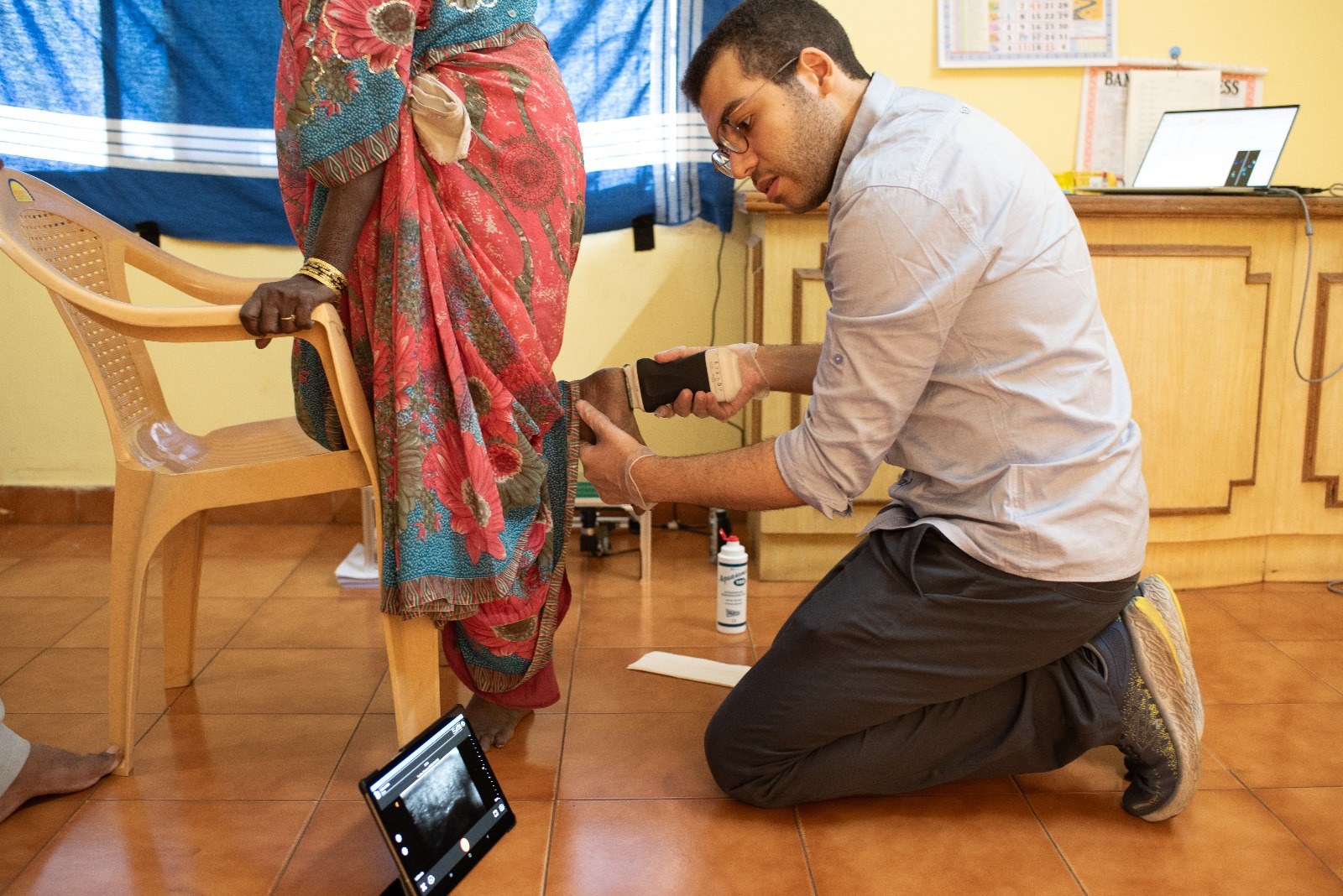
At one of the rural sites, we set up in a local school. People who had never met us welcomed us warmly, even when we didn’t share a language. There was something quite moving about that: arriving as a stranger and being made to feel welcome before you had much chance to explain yourself.
Dozens of people came to take part. They waited in a queue, sometimes for a long time, until we were ready for them. I remember concentrating on the feet I was scanning and noticing traces of mud nestled deep in the folds and grooves that years of hard work had etched into their skin. To me, these muddy traces tell their own story, honouring the lives and hard work of the people who stood before me.
That detail has stayed with me. We were measuring feet that carried people through lives we knew very little about. For a short time, those lives crossed with ours, and people gave us their time and trusted us to do our work.
It made the word “participant” feel rather small.
Then, after all that, there was food.
Members of the community had cooked for us in a modest kitchen-like space without much lighting. I hadn’t expected it. They had already welcomed us, helped make the work possible, and waited patiently while we collected our measurements. Somewhere in the middle of that, someone had also decided that we should be fed.
The food tasted as warm as the welcome.
I remember that feeling from so many of the rural places we visited: how difficult it seemed to leave without somebody offering us something home-cooked. I was conscious of the resources people were working with, which made their generosity especially touching. But what I remember most is how naturally they offered it. We were their guests, and they made sure we felt it.
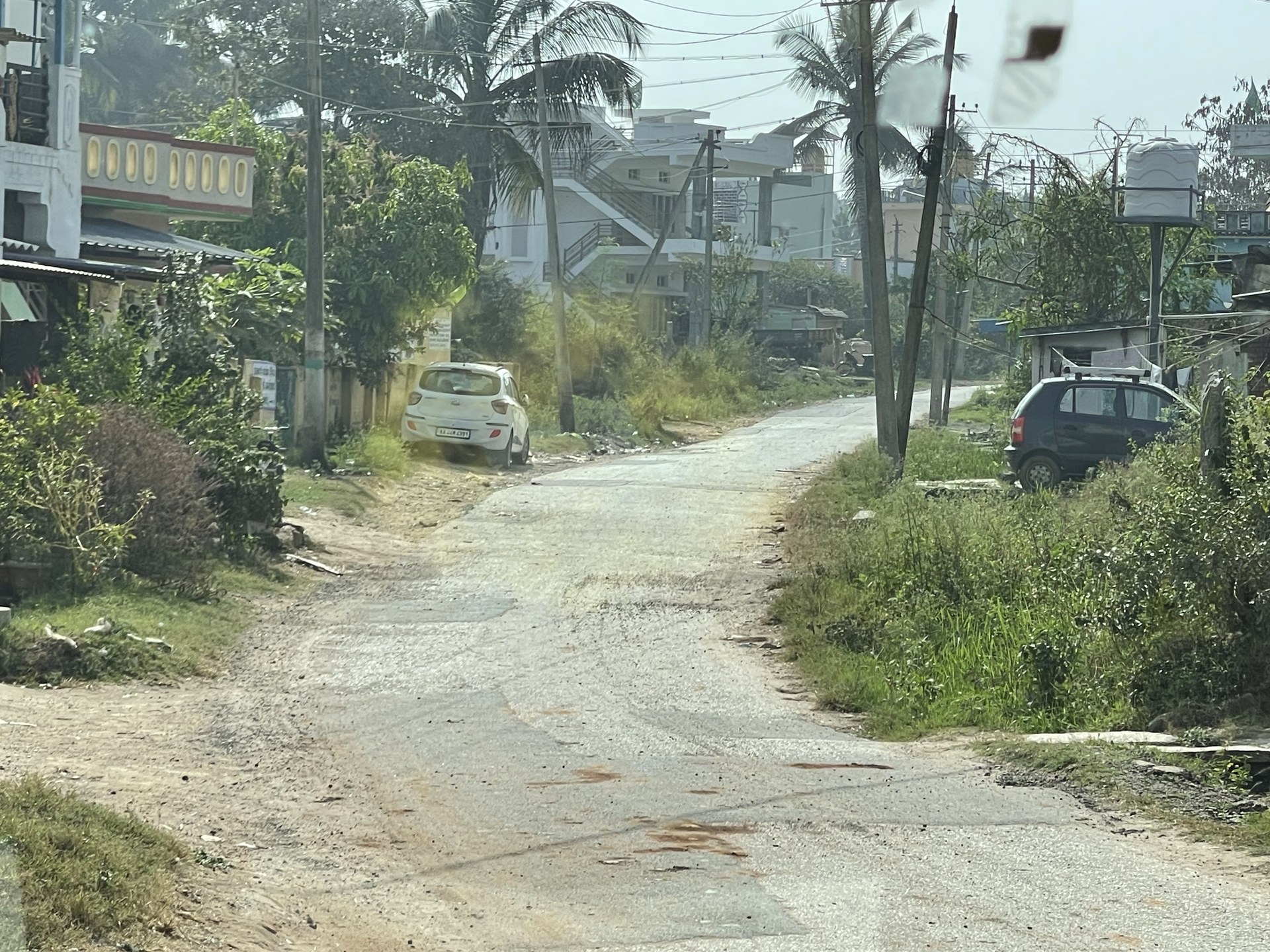
The school gave me another memory I still return to. Kris stepped into a classroom and greeted the students. Daylight came through the window, and the pupils were extraordinarily attentive and disciplined, perhaps the most disciplined I have ever seen.
I wouldn’t pretend that a brief visit told me everything about their education or their lives. Still, the seriousness with which those students approached learning made an impression on me, as did the commitment of the teachers working with them. Resources were limited. The desire to learn was very much there.
It made me think about my own education, and about how easily something that once felt like an opportunity can become an expectation. Access to equipment, a comfortable place to work, the simple assumption that the things you need will be available: I had grown used to a great deal.
I came home more grateful for those things, and a little less comfortable taking them for granted.
Some of the most personal moments happened at the end of the measurements. Elderly participants would sometimes tap my shoulder after I had finished working with their feet. I received those gestures as blessings, although I couldn’t be certain I understood their full meaning.
I found them deeply touching. I had been focused on getting the measurements right, being careful, and completing the work. Then a small gesture would draw me out of that concentration and remind me of the person sharing that moment with me.
I still think about it.
Having Dr Kristiaan (Kris) D’Août alongside me made the trip especially enjoyable. His network of collaborators in Bangalore helped make the work possible, and travelling with him brought another pleasure: the company of someone so open to exploring the world.
I appreciated that mindset. Being curious about a place, making room for unfamiliar ways of doing things, and enjoying what you encounter along the way can change the whole experience of travelling. I feel fortunate to have shared this one with him, and grateful to the local collaborators whose relationships and work allowed us to be there.
We also happened to be in India during the Maha Kumbh Mela, an extraordinary spiritual gathering held in Prayagraj every twelve years, with the 2025 celebration considered especially significant because of a rare celestial alignment said to occur only once in 144 years. Hundreds of millions of pilgrim visits were recorded during the festival that year. I didn’t attend the gathering myself, but simply being in the country while something of such immense scale and spiritual significance was taking place added another sense of wonder to the trip. There was so much happening beyond the small part of India I was getting to know. It made me want to understand more, while reminding me how much I had yet to understand.
Since coming home, I’ve found myself thinking more carefully about who my research is for.
I still care about the technical questions: how feet work, how tissues respond to load, how we measure movement well. But I’m increasingly interested in where those questions lead, whose experiences help shape them, and who might eventually benefit from the answers.
Working in Karnataka made those questions personal. It gave me the privilege of doing biomechanics research with communities whose everyday lives may be far removed from the settings in which much of our evidence is collected. It also made me want to look more closely at whose lives our findings can reasonably speak for, and whose we still need to understand.
I want that curiosity to influence the research I pursue: the people I work with, the places I go, and the practical value of what we develop together.
I don’t yet have a neat answer to what giving back should look like. That is something I want to work out with communities and local collaborators, by listening to what matters to them. But I know I want it to continue to be part of a meaningful biomechanics research journey.
When I think of that school now, I remember the equipment we brought and the measurements we collected. I also remember the queue, the classroom, the food, and the people who made room for us.
They had never met us before. They welcomed us anyway.
I hope I carry some of that generosity into whatever comes next.
Back to top